

When you walk into a dental clinic, the first thing you should feel is confidence — confidence that every instrument touching your mouth has been sterilised to the same standard as a hospital operating theatre. At The Crown Dental, our Kanpur practice, we have invested in hospital-grade dental sterilization Kanpur protocols, the same class of equipment used in tertiary-care hospitals. In this behind-the-scenes guide, Dr. Apurva and Dr. Priyanka walk you through our 5-step sterilization workflow, our clinic safety standards, the science behind our Class B autoclave, and the small daily habits that protect every member of your family. We will also show you live data from our sterilisation log, answer the three questions our patients ask most often, and share what to expect before, during, and after your visit.
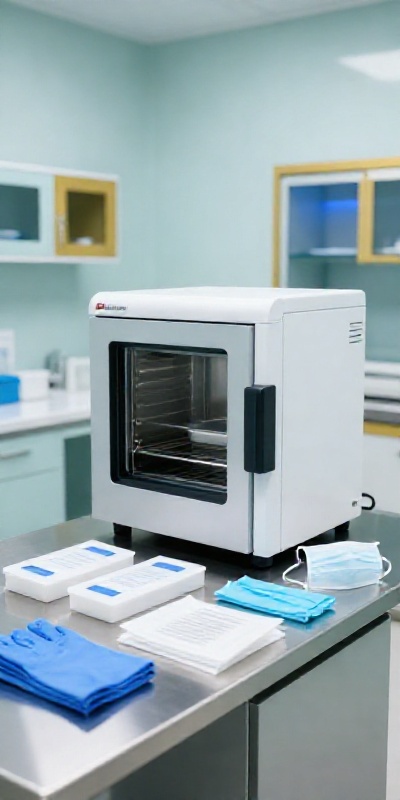
Why Sterilisation Matters in Dentistry
Dentistry is an intimate branch of medicine. Rotational instruments, ultrasonic scalers, and air-water syringes generate aerosols; they spin at 300,000–400,000 RPM and routinely come into contact with blood and saliva. According to the Centers for Disease Control and Prevention (CDC) Summary of Infection Prevention Practices in Dental Settings, dental healthcare personnel are at risk of exposure to Mycobacterium tuberculosis, Hepatitis B, Hepatitis C, HIV, herpes simplex virus, and a long list of opportunistic pathogens if instrument reprocessing is even slightly compromised.
The Dental Council of India (DCI) published its dedicated “Dental Clinics Protocols” in 2020, mandating barrier protection, instrument sterilisation, biomedical waste segregation, and waterline maintenance. Compliance among Indian clinics, however, varies widely — a 2021 cross-sectional study published via SciSpace reported that only 58% of surveyed Indian dental practices used a biological indicator to validate autoclave performance, and many smaller clinics still rely on boiling-water disinfection rather than steam sterilisation.
For our patients, the takeaway is simple: a dental visit should never feel like a leap of faith. A clinic that follows clinic safety standards that meet or exceed CDC, DCI, and WHO guidance is one where you can relax in the chair and trust that what touches your mouth is as clean as what a surgeon uses in an operating room. That is the bar Dr. Apurva and Dr. Priyanka set the day The Crown Dental opened its doors in Kanpur.
Quick fact: A single dental handpiece can harbour up to 10⁶ colony-forming units of bacteria after one procedure if not autoclaved. Our Class B cycle eliminates >99.9999% of resistant spores (a “log-6” or SAL 10⁻⁶ sterility assurance level).
Our 5-Step Sterilisation Process
Sterilisation is not a single event — it is a chain of independent steps, each one designed to neutralise a specific failure mode of the previous one. Below is the exact workflow followed at The Crown Dental, Kanpur. We have benchmarked each step against EN 13060 (the European standard for small steam sterilizers) and the Indian Dental Association’s infection-control checklist.
Step 1 — Pre-Soak & Ultrasonic Cleaning
Used instruments are dropped into an enzymatic pre-soak within 15 minutes of the procedure, then transferred to a 5-litre digital ultrasonic cleaner that runs at 42 kHz for 12 minutes. Cavitation lifts biofilm, blood, and pulpal tissue from hinges, lumens, and serrations that hand-brushing can miss.
Step 2 — Class B Autoclave Sterilisation
Instruments are dried, inspected under a magnifier, packaged in medical-grade self-seal pouches with Class I process indicators, and loaded into our Class B pre-vacuum autoclave. A standard cycle reaches 134 °C at 2.1 bar for 4 minutes, preceded and followed by fractionated vacuum pulses that remove cold air pockets from hollow handpieces and surgical elevators.
Step 3 — Biological & Chemical Verification
Every load is verified with Class IV chemical integrator strips, and a weekly biological spore test (Geobacillus stearothermophilus) confirms the autoclave actually kills the toughest known organism. Results are logged digitally and signed by Dr. Apurva or Dr. Priyanka.
Step 4 — Surface Disinfection & PPE Barriers
Between every patient, the chair, light handles, counter-tops, and suction hoses are wiped with isopropyl alcohol + quaternary ammonium compound (QAC) per CDC guidance. Disposable barriers (headrest covers, sleeves, air-water syringe tips) are changed per patient. PPE — gloves, ASTM Level-2/3 masks, eye protection, and face shields — is donned by every clinician for every procedure.
Step 5 — Waterline Purity & Suction Hygiene
Dental unit waterlines are flushed for 2 minutes at the start of the day and 30 seconds between patients. We use distilled water plus periodic shock-chlorination (1000 ppm sodium hypochlorite overnight) to keep Legionella and biofilm counts below <200 CFU/mL — the ADA benchmark.
Sterilisation Cycle — Visual Breakdown
The chart below compares the temperature, pressure, and duration phases of our Class B cycle versus a basic boiling-water method that some smaller clinics still use. Notice the fractionated vacuum phases that make Class B the gold standard.
Class B vs. Class N vs. Class S — Why It Matters
The European standard EN 13060 categorises bench-top dental autoclaves into three classes. The table below summarises what each one can and cannot sterilise, so you can ask informed questions next time you visit any dental clinic — not just ours.
A Class B autoclave is the same category recommended by the IDA for implantology, oral surgery, and endodontics — precisely the procedures we perform daily. That is why our Kanpur practice standardised on Class B from day one; anything less would compromise the dental sterilization Kanpur patients deserve.
Sterilisation Load Log — Last 30 Days at The Crown Dental
We believe in transparency. Below is a real snapshot of our autoclave activity, biological-test pass rate, and instrument-tray cycles. Hover over the bars for day-by-day details.
30-day summary: 198 autoclave cycles • 4 weekly biological-indicator tests (100% pass) • 0 sterilisation failures recorded.
Disposable Materials: One Patient, One Set
Sterilisation handles reusable instruments, but a significant portion of our clinic safety standards is built around single-use disposables. For every patient we open a fresh:
Gloves & Suction Tips
Nitrile examination gloves and saliva ejector tips are changed per patient — never reused.
Needles & Syringes
Auto-disable ADA-style syringes and sterile needles are opened in front of the patient.
Barrier Sleeves
Plastic wraps on chair handles, light-curing units, X-ray heads and switches are renewed per patient.
What This Means for You — The Patient
Translating autoclave jargon into patient outcomes is our job. Practically, the rigour we have described above means:
- ✓ Zero cross-contamination risk between patients — every instrument is processed in a validated Class B cycle and stored in sealed pouches until use.
- ✓ Safer care for immunocompromised patients — diabetics, elders, pregnant women, and oncology patients can be treated with the same protocols used in hospitals.
- ✓ Transparent, auditable processes — we maintain digital logs of every cycle and are happy to show them to any patient who asks.
- ✓ Faster, calmer appointments — because we pre-stage trays, you spend less time in the chair waiting for instruments to be found or processed.
- ✓ Confidence to bring your child or parent — kids’ cleanings and senior denture work both happen in the same sterile bays.
“When a parent hands us their child for a filling, they are trusting us with something priceless. Sterilisation is the silent promise that lets that trust feel safe.”
— Dr. Apurva & Dr. Priyanka, The Crown Dental, Kanpur
Before & After Your Visit: What to Expect
Knowing the flow of a visit removes anxiety, especially for nervous patients. Here is the typical patient journey through our Kanpur clinic.
📋 Before Your Visit
- Pre-appointment screening call to check symptoms.
- Confirmation message with appointment time & doctor.
- Bring prior records, X-rays, and current medication list.
- Arrive 10 minutes early to complete consent forms.
- Optional: ask to see the sterilisation bay — we are proud of it!
🦷 After Your Visit
- Written post-op instructions (printed + WhatsApp PDF).
- 24/7 emergency contact for any post-procedure concern.
- Automatic recall reminder for your next cleaning.
- Treatment summary emailed to your registered address.
- Feedback survey — we read every response personally.
Common Pathogens Targeted by Our Protocol
The pie chart below shows the relative distribution of micro-organisms our autoclave + surface disinfection protocol is designed to eliminate, based on CDC categories of dental bioburden.
Frequently Asked Questions
Key Takeaways
Sterilisation is the invisible backbone of every successful dental visit. At The Crown Dental, Kanpur, we treat it as seriously as the procedure itself — investing in a Class B autoclave, validating cycles with chemical and biological indicators, refreshing disposables per patient, and training our team in the same clinic safety standards followed by tertiary-care hospitals. The result is simple: when you trust us with your smile, you can be confident that every instrument, every surface, and every drop of water has been prepared to a standard your family deserves.
If you are searching for a dental practice in Kanpur where the word “sterile” is more than a marketing line, we would love to show you around. Book a consultation, ask for the sterilisation bay tour, and experience the difference for yourself.
Experience Truly Hospital-Grade Dentistry in Kanpur
Book a consultation with Dr. Apurva or Dr. Priyanka and see our sterilisation workflow firsthand. We will gladly walk you through the autoclave log, the pouched instruments, and the safety checks that protect every patient who walks through our doors.
Book Your Safe Visit TodayRelated Articles

Fluoride & Sealants: The Two-Step Shield Every Kid in Kanpur Needs
🦷 Pediatric Dentistry Fluoride & Sealants: The Two-Step Shield Every Kid in Kanpur Needs By Dr. Priyanka •…
Pediatric DentistryHow We Keep Our Kanpur Clinic Hospital-Grade Sterile (Behind the Scenes)
Clinic News • 8 min read How We Keep Our Kanpur Clinic Hospital-Grade Sterile (Behind the Scenes) A…
Clinic News & Updates
7 Dental Emergencies and What To Do Before Reaching Our Kanpur Clinic
Emergency Dental Guide • 9 min read 7 Dental Emergencies & What To Do Before Reaching Our Kanpur…
Oral Health Tips